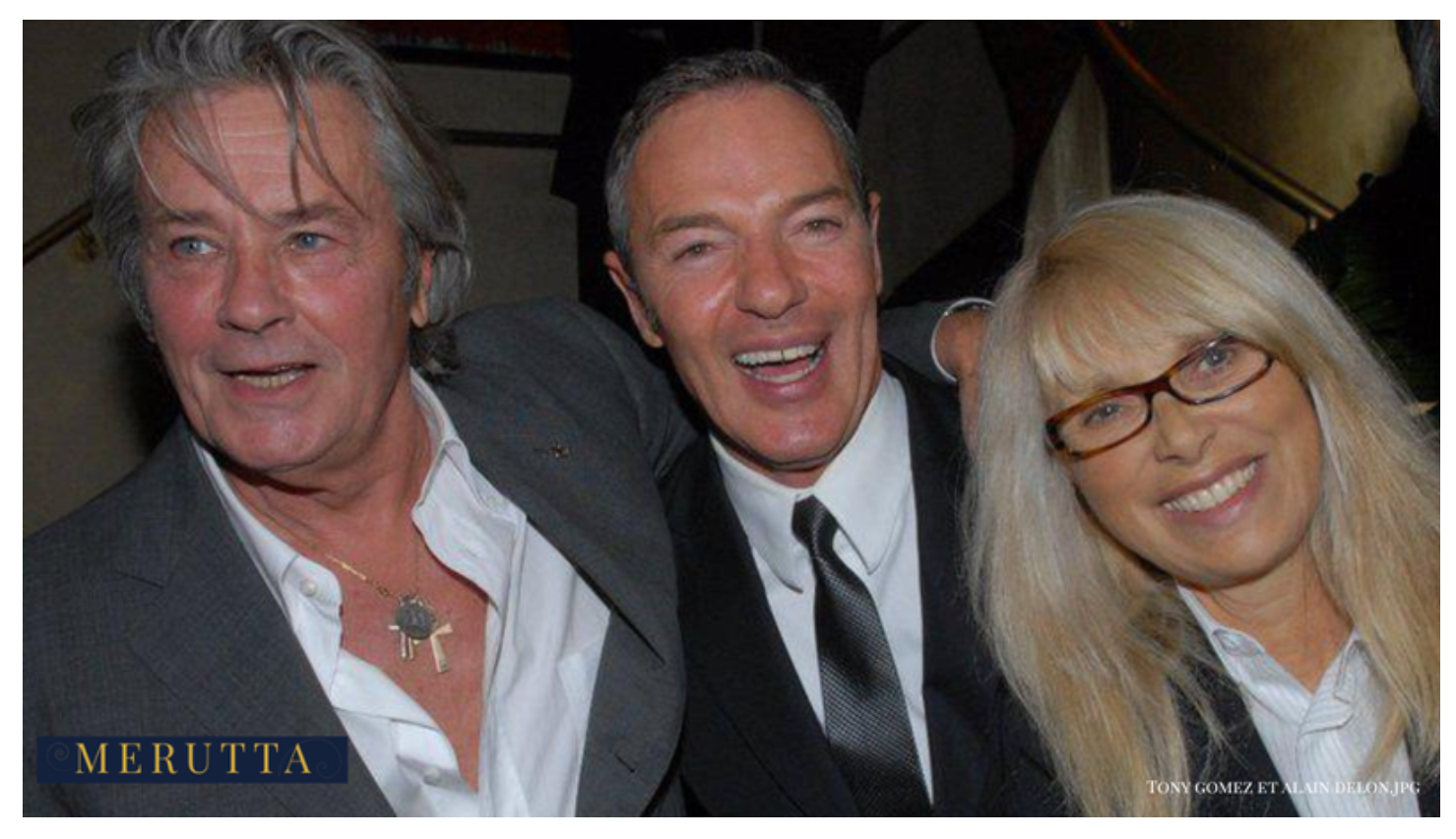
A fairy tale that did NOT last forever.
To be beside him, one had to know how to live in his shadow.
Mireille Darc could.
She did not fight for him — she simply loved.
Not herself in him, but him himself.
That was her strength and her wisdom.
Romy Schneider and Alain Delon 1959
Romy Schneider did not know how to live in the shadow.
She lived openly, with her whole soul, unable to leave distance between herself and another person.
She could not be “halfway” close — she needed to be entirely.
Such was her nature: whole, vulnerable, unprotected.
Her childhood left her no support.
Her mother used her fame, turning her daughter into a reflection of herself.
Only her grandmother, Rosa Albach-Retty, on her father’s side, gave her quiet, genuine love.
And so Romy sought in a man not only passion, but refuge — protection, a home, understanding.
Alain Delon could not become a refuge.
He was created for movement, for freedom, for the solitude he had chosen himself.
He did not seek salvation — he was an element, a force that could not be possessed.
He did not love through words, but he stayed in the hardest moments, asking nothing in return.
Such was his faithfulness: silent, heavy, real.
Romy lived in another dimension.
For her, love was not a union but a fusion.
She could not bear distance, silence, pauses.
Everything born in her heart was absolute — and therefore destructive.
She believed he would understand her pain, accept her fragility, become her protection from the world.
And he believed that love must allow room to breathe.
They could not be together because they spoke different languages of the soul.
He — the language of freedom.
She — the language of devotion, honest and merciless toward herself.
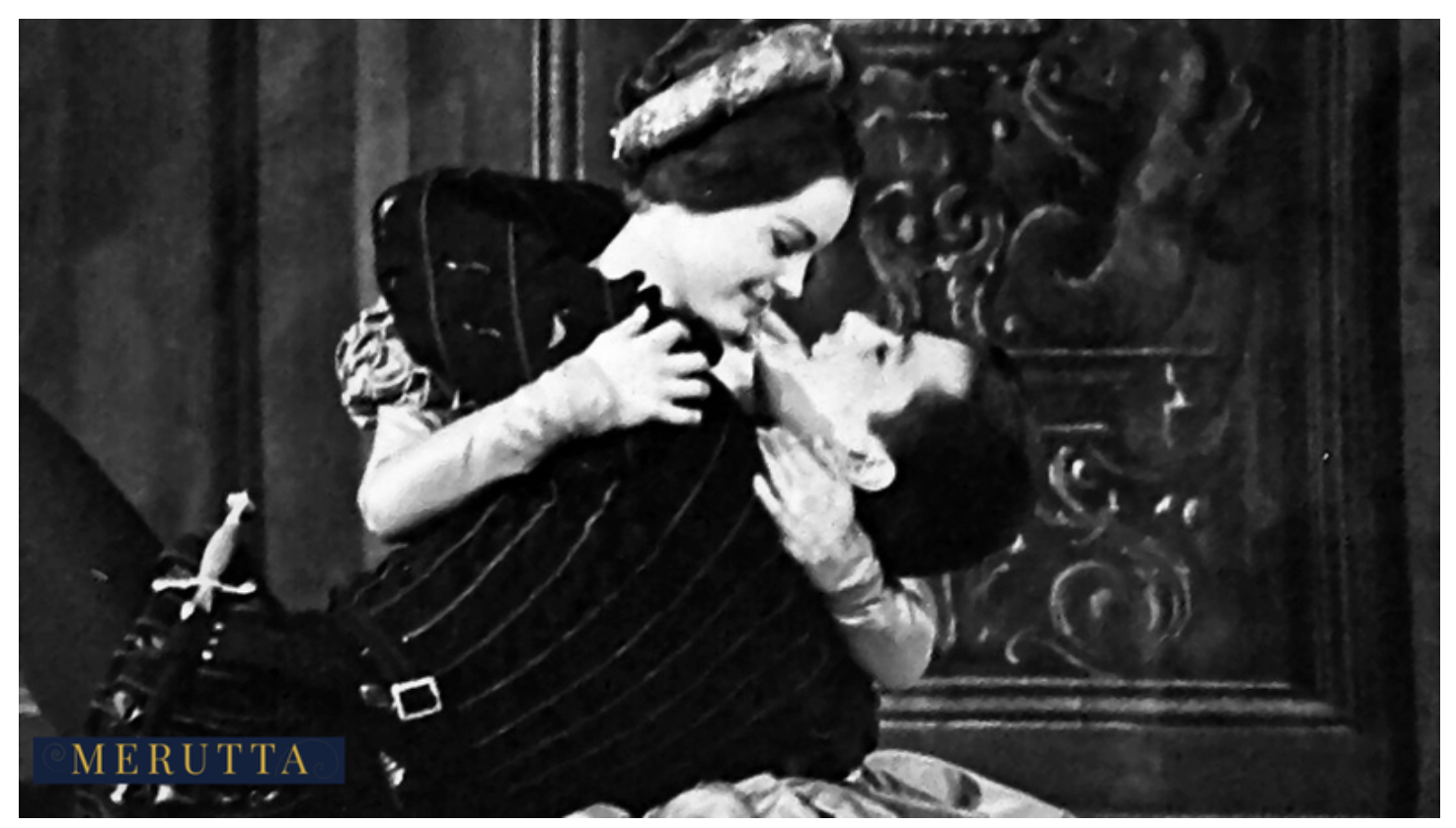
‘Tis Pity She’s a Whore (1961) – directed by Luchino Visconti, starring Alain Delon & Romy Schneider.
Separation became for her an inner collapse.
From then on, she lived as though through life itself.
With immense talent, with strength — but already without a center.
As an actress, she played the life she could not live.
When her son David died, the pain became final.
Delon was the first to arrive.
He held her hand.
He was silent.
Mireille Darc stood nearby — calm, dignified.
Without jealousy, without words.
A year later, Romy was gone.
May 29, 1982.
He arranged the funeral.
He chose a quiet place — Boissy-sans-Avoir cemetery, near Paris.
He brought her son’s ashes there.
He placed in the coffin their shared photograph.
Later, he would write:
“I see you sleeping.
I am beside you.
Farewell, my little doll.”
And then he would say:
“Romy was everything.
Mireille is forever.” Why can we still not forget them? Because they lived a love that cannot fit into words.
A love in which pain is the continuation of feeling, and memory — a form of fidelity.
Because they remained in history not as actors, but as human beings who lived too fully, felt too deeply,
and paid for it with their own silence. They did not become legends — legends are created by time and by the public.
They became a human truth, impossible to erase.
And perhaps we remember them because within each of us lives such a love —
the only one, the impossible one,
but the real one.