ALAIN DELON AND SIMONE SIGNORET IN LA VEUVE COUDERC (1971)
Simenon’s novel was born in the years of war. His “dossier novels” always spoke of people pushed to the margins of society, and “The Widow Couderc” was precisely such a story — about a woman and a man who find themselves together not because they were brought by love, but because in their solitude there was still space for another. Simenon was alive during the shooting of the film and only died in 1989.
He never publicly complained about the differences between book and adaptation, but it is known that he rarely interfered with directors’ work, leaving them the freedom of interpretation. For him, what mattered was not the coincidence of details but the preservation of atmosphere. In the case of “They Widow Couderc” he blessed the casting: Simone Signoret seemed to him the embodiment of that female strength and grief he invested in his heroines.
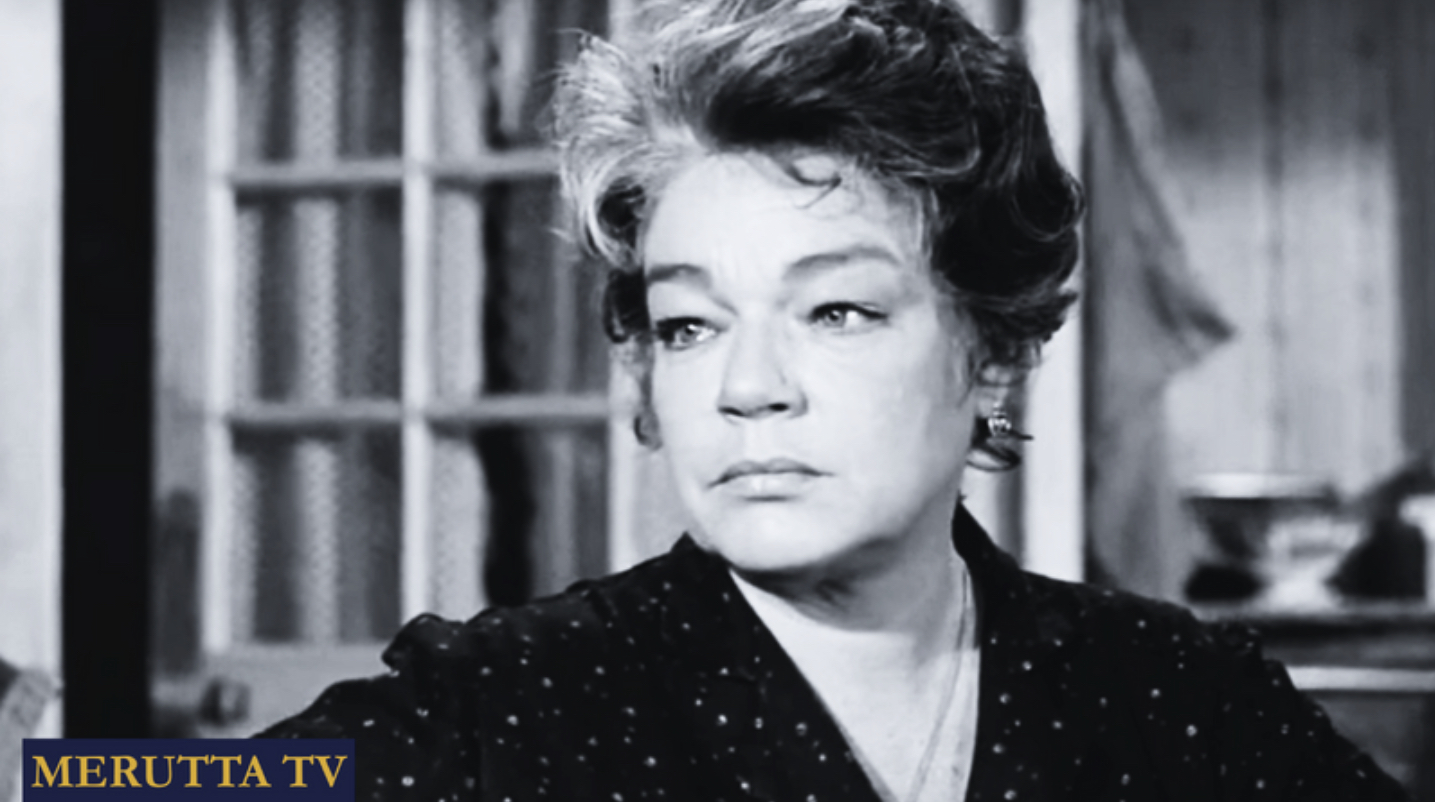 SIMONE SIGNORET IN LA VEUVE COUDERC (1971)
Filming took place in the summer of 1971 in Burgundy and Jura, at the drawbridge over the canal in the village of Cheuge (Côte-d’Or), and also in Dole and Gray. These places, misty, humid, half-forgotten, seemed themselves to carry the weight of time. The producers were Raymond Danon and Maurice Jacquin, and distribution was handled by CFDC.
Granier-Deferre shot the film without conventional climaxes: the tension builds in micro-gestures and lingering glances, in pauses where silence becomes meaning.
“Ces amours quasi œdipiennes sont traitées avec tact… mais il manque un peu de flamme” — wrote critic Jean de Baroncelli in Le Monde (October 21, 1971).
These almost Oedipal relationships, in his words, are shown with tact, but lacking flame. And yet it was precisely the absence of “flame” that became the film’s style: it burns not with words but with silence.
Cinematographer Walter Wottitz created a special palette: earth, water, wood, fabric. The camera seems to absorb the matter of everyday life, and the grain of the film becomes the skin of the picture. Wottitz, Oscar-winner for “The Longest Day”, here demonstrates the opposite approach: not epic scope but restrained intimacy. The light falls as if memory itself illuminates the faces of Signoret and Delon.
The music of Philippe Sarde, who was only twenty at the time, is barely audible. It is not illustration, but the breathing of space. His score emphasizes silence, not drowning it but framing it, like a frame around emptiness.
At the center of the film is the duet of actors. Simone Signoret plays not just a widow, but a woman whose grief has turned into discipline, into a heavy gait and a firm line of lips. In her memoir (La nostalgie n’est plus ce qu’elle était, 1976) she wrote of Delon with irony and warmth, calling him “un fou généreux” — “a generous madman,” noting his mix of audacity and delicacy.
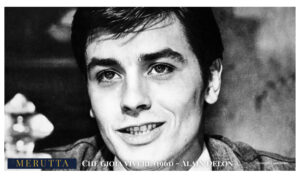
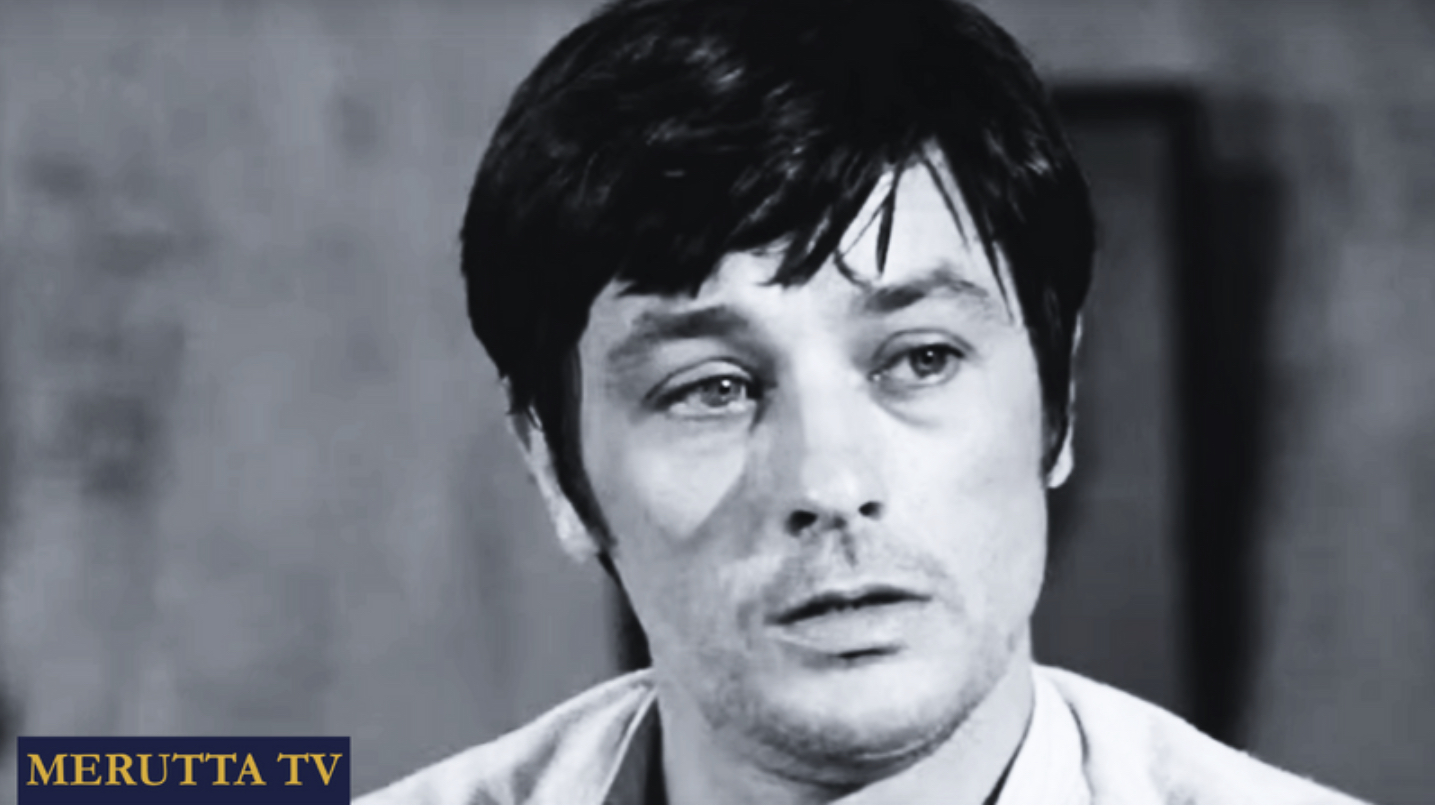 ALAIN DELON AS JEAN LAVIGNE IN LA VEUVE COUDERC (1971)
“Signoret bursting with anger and grace. Delon remarkably understated” — wrote modern criticism (Edge Media Network, 2021).
This silence of Delon is akin to classical noir, where the hero is always in shadow and every movement is more frightening than words. But here it acquires special depth: he inhabits emptiness, not a role. In these pauses one hears both Bresson, with his asceticism and quiet drama, and Chekhov, for whom meaning is born not in action but in subtext. Thus the two actors create not a dialogue but a collision of worlds: a woman who no longer waits, and a man whom no one awaited.
The film was received ambiguously: some reproached it for slowness, others for muted tone. But over time this slowness came to be seen as a virtue. Already in the year of its release, “The Widow Couderc” topped the Paris box office, and in 1972 it received the Grand prix du cinéma français. Today it is called a hidden masterpiece of French cinema of the 1970s — a rural melodrama without melodrama, a drama where the leading role belongs not to action but to memory and silence.
“The Widow Couderc” is not a story of events, but a story of destinies. A woman who no longer waits. A man whom no one awaited. They met not for love and not for redemption, but in order to briefly remember what it means to be alive. And in this meeting there is something that cannot be expressed in words: memory, guilt, and silence, which speaks louder than any line.