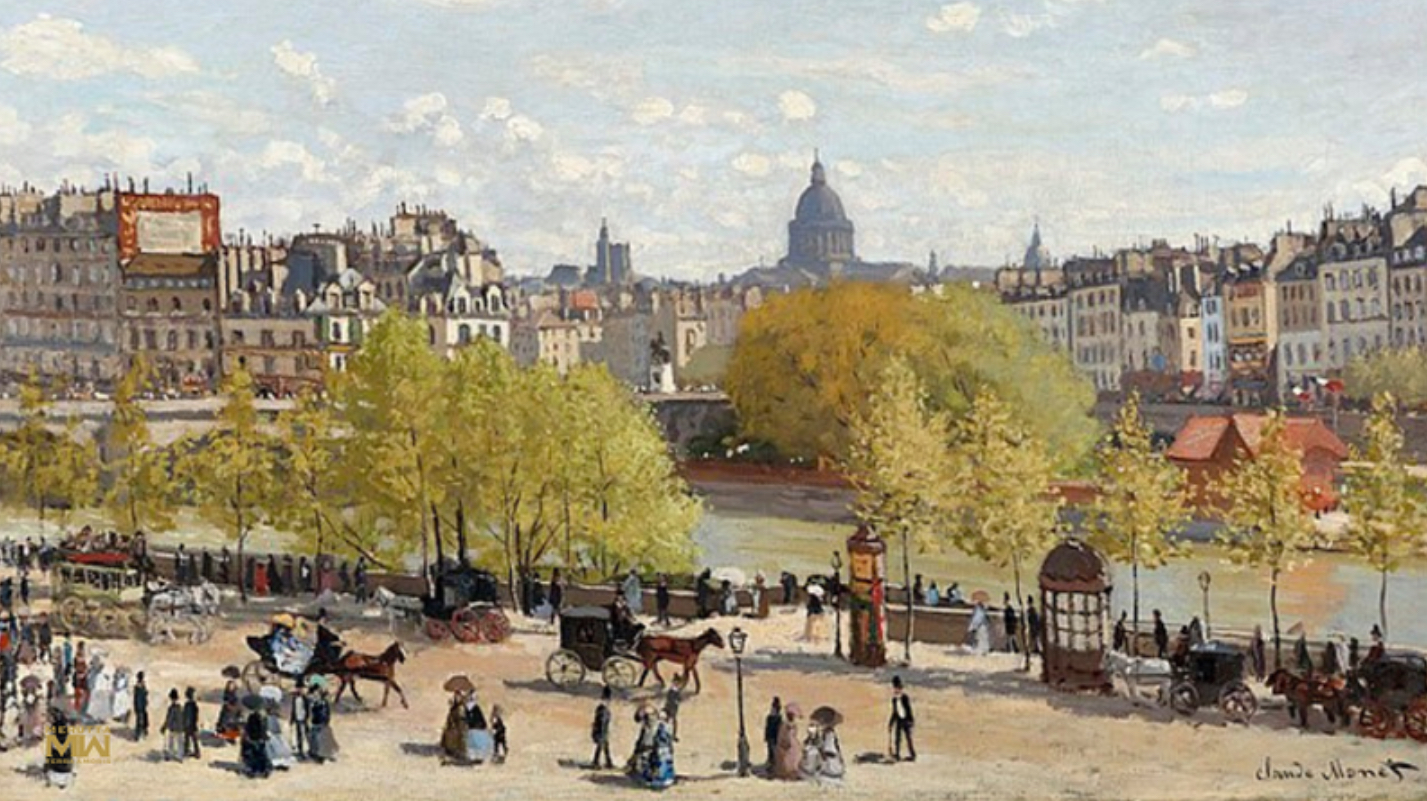
On the night of 19 October 2025, Paris suffered a blow that cannot be measured by the usual logic of crime. The Louvre—the symbolic heart of French culture and one of Europe’s spiritual landmarks—became the stage of a daring, almost theatrical robbery. In a place where solemn silence normally reigns, a precise and
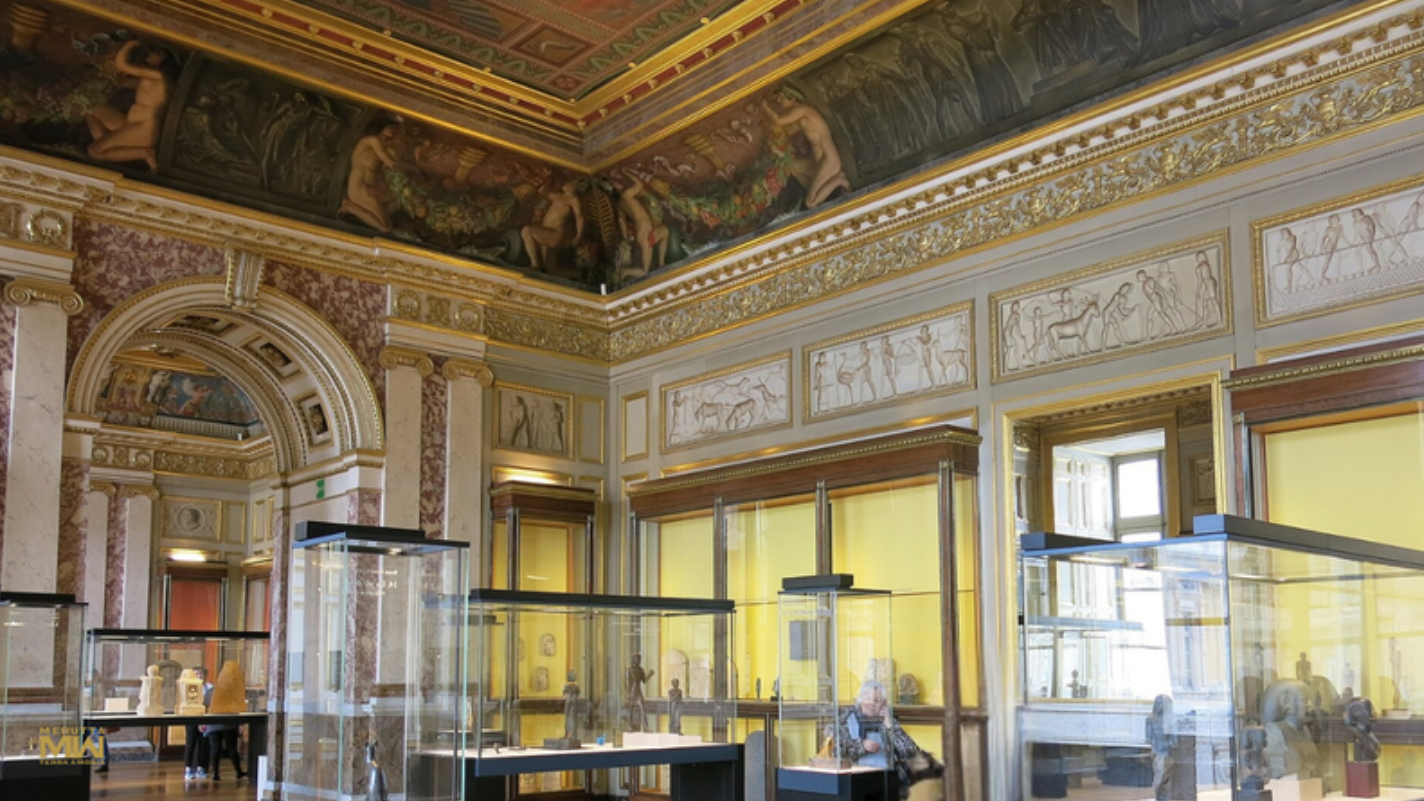
cold-blooded operation unfolded within minutes, evoking the atmosphere of European art-noir.
The criminals entered the Galerie d’Apollon, the golden hall created under Louis XIV, and stole eight imperial jewels of the Second Empire. Objects once belonging to the Bonaparte dynasty vanished, including a piece crafted for Empress Eugénie.
These were never considered mere jewels; they were carriers of France’s historical memory, symbols of power and 19th-century elegance. They cannot be replaced. They cannot be valued. They cannot be recreated.
The operation was swift. In just minutes, the thieves opened a display case engineered to resist impact and vibration; they acted with such confidence that it seemed as if they knew the museum’s security architecture from within.
There was no noise, no panic, no chaos—only quiet, deliberate precision. Even security experts admit: this was not the work of amateurs, but of a highly trained, technically skilled group.
France experienced this event as a cultural trauma. The public spoke of a “wound to the nation’s heart.” By morning, a line formed outside the closed Louvre—not of tourists, but of citizens who came to share the pain.
For the French, the Louvre theft is not a matter of criminal statistics. It is an intrusion into the most sacred space of their cultural identity. The Louvre is not a museum. It is an altar.
Amid this, attention turned to the museum’s director, Laurent Le Cache, appointed as a reformer tasked with guiding the Louvre into a new era: renewing collections, expanding educational programs, modernizing security, and digitizing archives. He was seen as an intellectual figure—diplomatic, forward-looking, yet pragmatic. After the heist,
Le Cache became the focal point of public criticism. His response was immediate: he described the event as “a blow to French heritage,” promised complete transparency, a comprehensive review of all security protocols, and stated that “a theft of this magnitude is incompatible with the standards of the 21st century.”
Despite his firm stance, the pressure is enormous: political figures demand explanations, curators demand guarantees, and the public demands answers.
Simultaneously, the most extensive cultural-crime investigation in decades is unfolding. A special task force of police, gendarmerie, and intelligence agencies has been assembled. The Brigade de Répression du Banditisme, the cultural- property unit OCBC, and the internal intelligence service DGSI are all involved, considering the likelihood of an organized criminal network.
Europe has brought in Europol, given the high risk of the jewels being smuggled out of the EU. Investigators are pursuing four main theories. The first: a commission by an extremely wealthy private collector, willing to pay for artifacts that will never reappear on the market.
The second: a professional European art-crime group. The nature of the heist closely resembles their signature operations. The third: inside assistance—someone with knowledge of guard rotations and timing. The fourth: trafficking through Switzerland or the Middle East, classic routes for the illicit art market.
Forensic experts are now analyzing metal fragments, tool marks, traces on glass shards, and footprints.
Police are collecting footage from thousands of cameras— streets around the Louvre, bridges on the Seine, metro stations, and airports Charles de Gaulle and Beauvais. Hours upon hours of video are being processed by tracking algorithms.
All stolen items have been registered in Interpol and Europol databases, including the European Stolen Art Register. Several individuals have already been detained, but none are masterminds—only low-level participants, drivers, and logistical helpers.
The key figures remain unidentified and likely left France immediately after the operation. Investigators are monitoring the shadow market for gemstones, as such relics are often dismantled, melted, or sold through private, invitation-only channels.
In this tense atmosphere, President Emmanuel Macron called the theft “an attack on the soul of France,” demanding a complete overhaul of national museum security, intensified international control over the illicit art market, and the recovery of the jewels “wherever in the world they may be found.”
Behind closed doors, the Élysée Palace acknowledges that the stolen pieces may already have left Europe—and that their return could take years.
Today the Louvre stands with empty spaces where the jewels of the Second Empire once shimmered. France feels the sharp ache of loss. Europe confronts the realization that even its most protected cultural institutions are vulnerable.
And one question lingers, heavy and unresolved:
How do we preserve beauty when the world around us grows more ruthless, more rapid, and more hungry for possession?